Cardiac Emergencies Demand Fast, Confident Action
Heartsaver CPR AED in Richmond for individuals required to deliver adult CPR and AED operation during sudden cardiac arrest
CPR of Richmond KY offers Heartsaver CPR AED, a certification course designed for individuals with little to no medical training who need CPR and AED certification for work, compliance, or personal preparedness. You may work in a school, fitness center, church, or workplace where OSHA or employer standards require certification, and this instructor-led, hands-on training focuses on real-life emergency response, including CPR, AED use, and choking relief for adults throughout Central and Southeastern Kentucky. When someone collapses suddenly, stops breathing, or begins showing signs of cardiac arrest, you need to recognize the emergency, start compressions, and use an AED before emergency medical services arrive.
This course teaches high-quality adult CPR, effective breathing techniques using barrier devices, and proper AED operation in emergency situations. You learn to assess responsiveness, call 911, perform chest compressions at the correct depth and rate, deliver rescue breaths without overinflating the lungs, and apply AED pads correctly to deliver a shock if advised. The training emphasizes fast, confident response during cardiac emergencies to improve survival outcomes, and you practice on adult manikins and AED trainers to build the muscle memory and decision-making skills necessary when real emergencies occur. The course typically takes two to four hours and includes optional add-ons for infant CPR and choking if your job or personal needs require those skills.
If you are an individual or organization needing quick certification, contact CPR of Richmond KY to register or schedule group training in Richmond with flexible options and same-day completion.
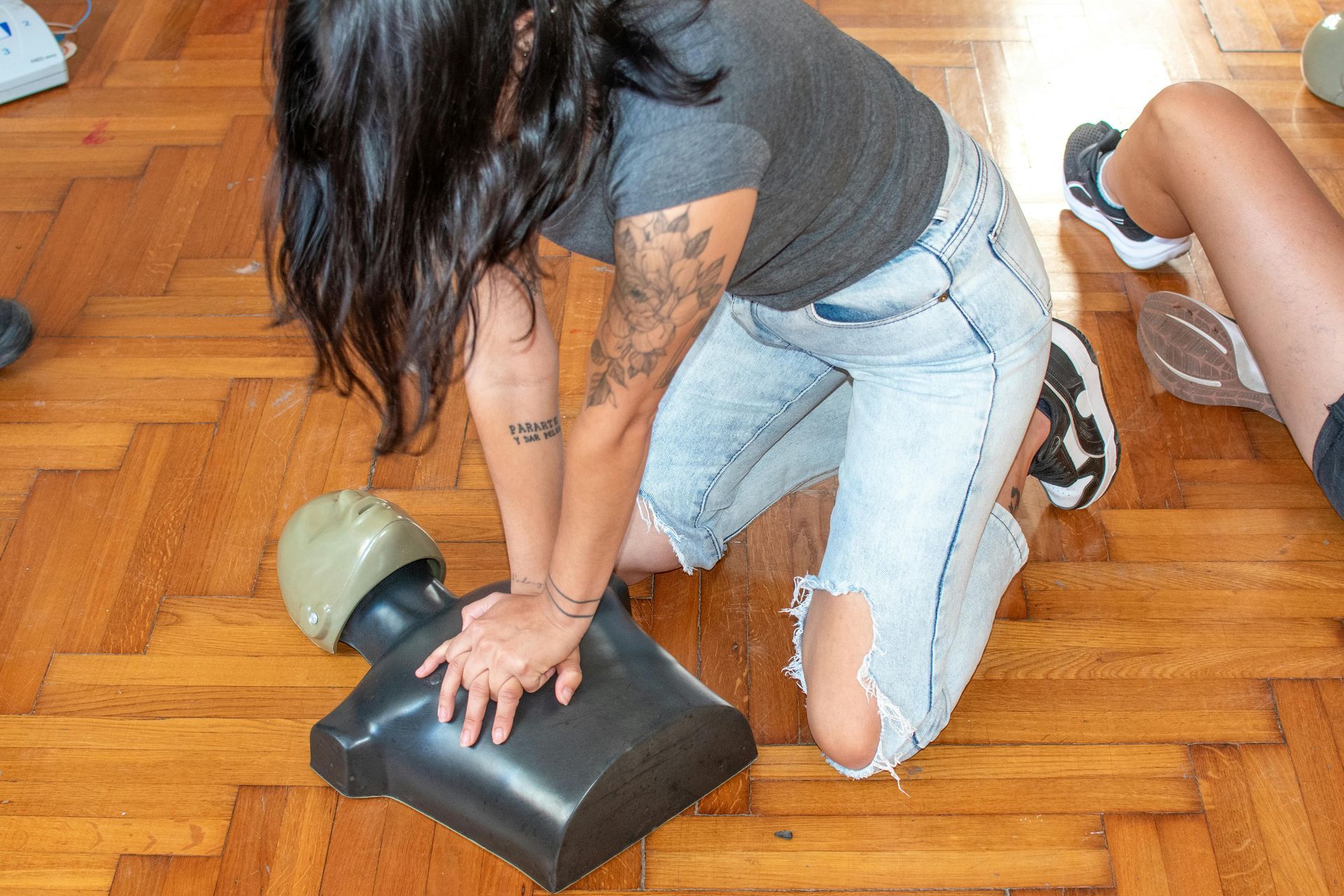
Practice on Realistic Equipment Builds Skill and Confidence
You practice chest compressions on adult manikins, using proper hand placement, compression depth, and rate to simulate effective CPR. Instructors guide you through each step, from checking for responsiveness and calling for help to starting compressions and using a pocket mask or face shield to deliver rescue breaths. You also train with AED devices that provide audio prompts, analyze heart rhythm, and advise whether a shock is needed, so you know how to attach pads, follow device instructions, and resume CPR immediately after shock delivery.
After completing this course, you will recognize cardiac arrest quickly, perform CPR without hesitation, and operate an AED with precision. CPR of Richmond KY ensures you leave the training ready to respond when someone's heart stops, whether you are at work, at home, or in a public space. You will know when to stop compressions to check breathing, how to position an unresponsive person who is breathing normally, and how to perform the Heimlich maneuver on a conscious choking victim or abdominal thrusts on someone who becomes unconscious.
The course also covers common mistakes, such as compressing too shallow or too fast, and how to avoid them during real emergencies. This training does not include first aid, child CPR, or infant CPR unless you add those modules, and it does not qualify you to provide care in a healthcare setting. You receive certification upon successful completion of skills practice and written assessment, and your card is valid for two years.
What You Need to Know About CPR and AED Certification
Understanding when and how to use these skills can make the difference between life and death, and this course ensures you are prepared to act when seconds count.
What is the purpose of an AED?
An AED analyzes the heart's rhythm and delivers an electric shock to restore normal heartbeat during sudden cardiac arrest. The device provides step-by-step instructions, making it possible for someone with no medical training to use it effectively.
How deep should I compress during adult CPR?
You compress at least two inches but no more than 2.4 inches at a rate of 100 to 120 compressions per minute. Proper depth and rate ensure blood circulates to vital organs, and full chest recoil between compressions allows the heart to refill.
When should I stop CPR?
You stop CPR when the person shows obvious signs of life such as breathing normally or moving, when EMS arrives and takes over, or when you are too exhausted to continue. In most cases, you continue until professional help is present.
Why does the course include choking relief?
Choking can quickly lead to unconsciousness and cardiac arrest if the airway remains blocked. Learning abdominal thrusts and how to transition to CPR if the person becomes unresponsive ensures you can manage the full range of airway emergencies in Richmond.
What happens if I perform CPR incorrectly?
High-quality CPR significantly improves survival rates, and even imperfect CPR is better than no CPR. The course teaches you correct technique so you can perform confidently and effectively, reducing the risk of errors during real emergencies.
Whether you are certifying for the first time or renewing your skills, CPR of Richmond KY provides the training you need to respond effectively during cardiac emergencies. Reach out to schedule a class or organize group training for your team.
Register for Heartsaver CPR AED Certification
Learn how to respond confidently in emergencies with our Heartsaver CPR AED course. This training covers CPR, AED use, and basic first aid skills for adults, children, and infants—perfect for workplaces, schools, and community members.